

Winter on the Door Peninsula
What the Sturgeon Bay end of the coast does between the last ferry in October and the first freighter out in March, and why so many locals spend one week of it in the Caribbean.
Added in 2026. A new guide written for this archive from public sources (Wikipedia, the National Register of Historic Places, NOAA, the Wisconsin Historical Society and the attractions themselves). The original Schooner Coast site did not carry this page.
The charter boats come out of the water in October. By then the S.S. Badger has made her last crossing to Ludington for the year, the museum tugs are buttoned up, and the beach parking lots are empty enough to land a plane on. People who only know this coast in July assume it closes. It doesn't. It changes jobs. The summer coast sells sunsets and fish boils. The winter coast is a working shipyard, a frozen bay and a lot of people who recognize each other by their trucks.
This guide covers the Sturgeon Bay end of the Schooner Coast and the Door Peninsula above it, December through March: what the ice really does, which boats stop and which keep going, a few winter dates worth the drive, and the habit a fair number of locals have of disappearing for a week in February to somewhere with palm trees. Event dates and schedules move from year to year, so check before you go.
What the lake actually does
Lake Michigan almost never freezes over. NOAA's Great Lakes lab has tracked ice cover since 1973, and in a typical winter the lake peaks at about one-third covered. Only 13 of the last 54 winters got past half. Twice it came close to closing: 93 percent in February 1977 and the same figure again in March 2014. In 2024 the peak was 18 percent. Last winter, 2026, it topped out at 37 percent at the end of January.
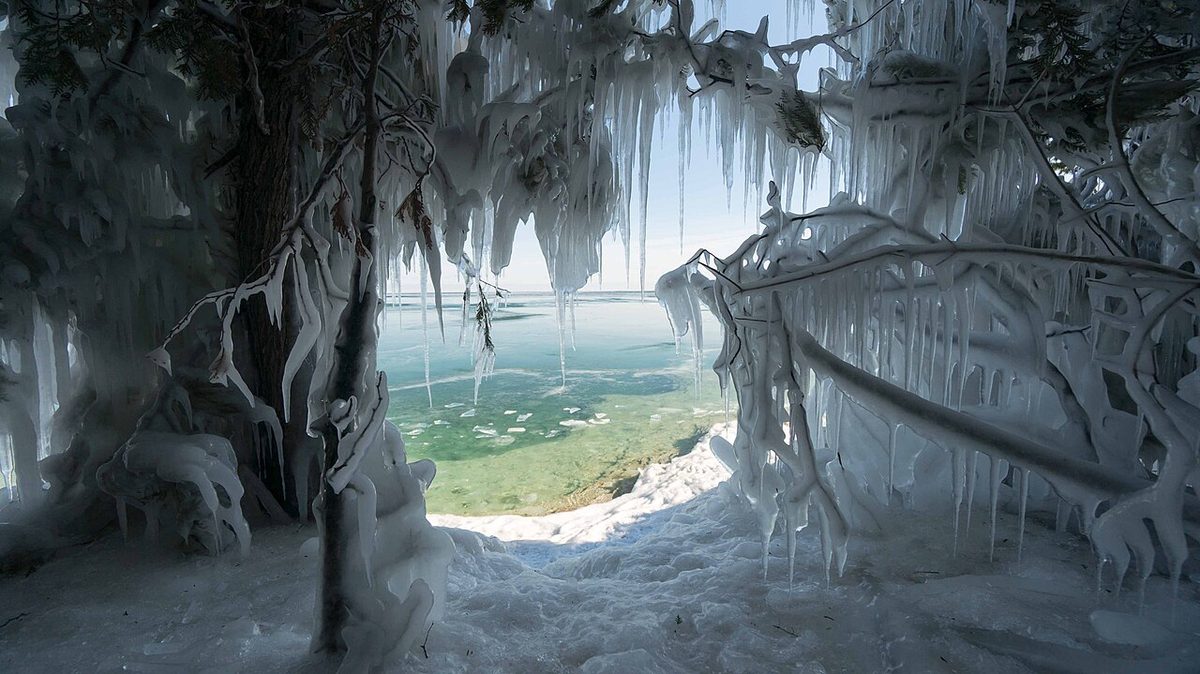
On the ground that plays out unevenly. The open-lake side, from Algoma up past Jacksonport, usually keeps dark water offshore all winter while the shore builds up shelf ice, frozen spray and glazed cedars. Cave Point County Park, next to Whitefish Dunes, is the place to see it: the same waves that cut those limestone ledges in summer coat them in ice by January. The Green Bay side is shallower and better sheltered, and in most winters its bays freeze hard enough to carry shanties. Sturgeon Bay itself sits in between, and the ice in the harbor is shaped as much by ships as by weather.
The boats that lay up
The Badger sails from mid-May to mid-October and then lays up in Ludington. Her absence is the first sign of winter on the Manitowoc waterfront. The bigger change comes in January. On January 15 the Soo Locks at Sault Ste. Marie close for about ten weeks of repairs, which cuts Lake Superior off from the lower lakes, and the freighters that carry ore, stone and coal head for winter berths. In 2026 the Poe Lock reopened on March 25.
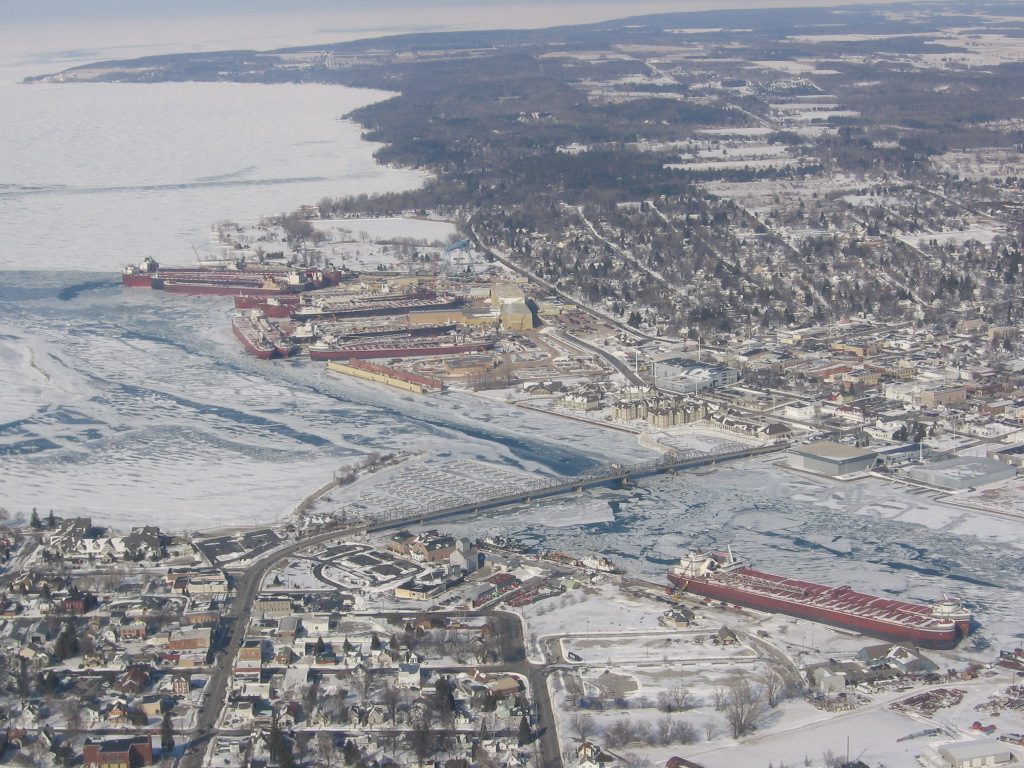
A good number of those boats come here. Fincantieri Bay Shipbuilding, the yard across the water from downtown, does its heavy repair work in the off-season: new hull plating, engine overhauls, the five-year inspections. The aerial photo at the top of this page, taken in February 2006, shows thirteen lakers tied up along the yard. Most winters you can count a fleet of them from the Michigan Street Bridge, and plenty of people in town know which boat came in before the paper does.
The February question
Here is something summer people don't see. Somewhere around the middle of January, the talk at the coffee counters in Sturgeon Bay turns to who is going where. Not everyone goes. But a week somewhere warm in February is as much a part of the year up here as cherry picking, and for some families it is the thing that gets them to March.
Even the schooner does it. The Denis Sullivan, launched in Milwaukee in 2000 and a regular visitor to this coast in her Great Lakes years, now spends her winters in the Caribbean, running school programs out of Christiansted on St. Croix.
For a lot of people from northeast Wisconsin the Dominican Republic has become the easy answer. Punta Cana is roughly 2,100 miles from Sturgeon Bay as the gull flies, its airport is one of the busiest in the Caribbean, and the east end of the island is in its dry season while we are scraping windshields. The mistake first-timers make is to land, check in and never leave the resort strip. If you want more than a pool, it is worth planning around seeing most of Punta Cana's sights in a few days: an early morning on Bávaro beach before the umbrellas go up, a boat day out to Saona Island, a drive to Altos de Chavón above the Chavón River. On the map they look far apart. With your own wheels and an early start, they fit into a week with room to spare.
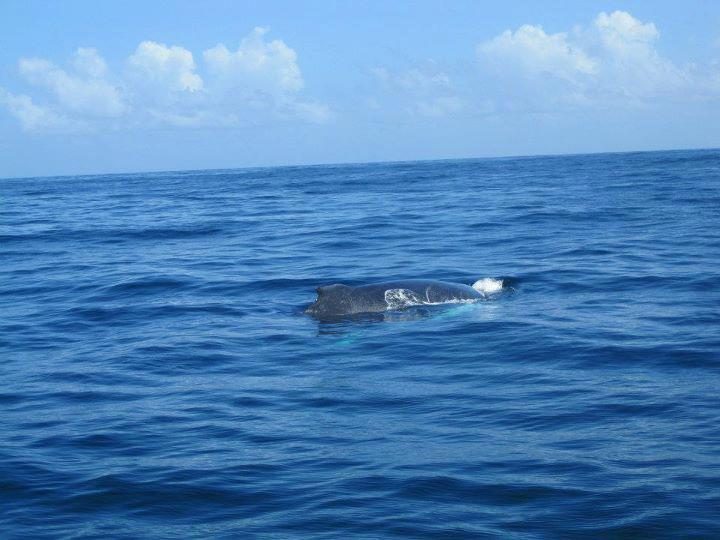
Anyone raised around Great Lakes boats will want one more day on the water. From about mid-January to the end of March, North Atlantic humpback whales gather to calve and breed in Samaná Bay and on the Silver Bank, waters the Dominican government has protected as a marine mammal sanctuary since 1986. Samaná is a long day trip from Punta Cana, and the whale boats there work under sanctuary rules on how close they may go. Watching a humpback roll in eighty-degree air, it is hard to believe the canal back home is full of ice.
Ice on the bay side
The people who stay have the bay. When it locks up, the sheltered water on the Green Bay side, places like Little Sturgeon Bay, Sawyer Harbor and Riley's Bay, fills with shanties and snowmobile tracks. Whitefish are the main draw, with perch, northern pike and walleye in the mix. DNR fisheries people in Sturgeon Bay have linked good whitefish years to good ice cover, which is one reason the regulars watch the freeze-up so closely.
A charter deckhand's advice, for what it is worth: no ice is safe ice, and bay ice moves. Door County rescuers have had to pull anglers off sheets that broke loose and drifted out into Green Bay. Ask at a bait shop in Sturgeon Bay the morning you go, not the day before, and be wary near the harbor and the canal, where traffic and current work on the ice. The old schooner captains feared November more than January for a reason; the gale that took the Christmas Tree Ship in 1912 came before the freeze, not after it. In midwinter the danger is under your boots.
The ferry that doesn't stop
One boat keeps working all winter. The crossing from Northport, at the tip of the peninsula, to Detroit Harbor on the island runs all year, across Porte des Morts, the strait the French named Death's Door. In winter the schedule drops to a couple of round trips a day and the work falls mostly to the Arni J. Richter, a four-season ferry built for the line in 2003 with an ice-class hull and propeller. In summer the ride takes about half an hour. In January it takes as long as the ice says, and on some days the boat stays at the dock. One of her fleet-mates, the Robert Noble, is named for a man who survived those icy waters in December 1864. Islanders plan around the ferry. Visitors should too.
Three winter dates worth the drive
New Year's Day, Jacksonport. The Jacksonport Polar Bear Club has held its plunge into Lake Michigan at Lakeside Park every January 1 since 1986. It starts at noon. Hundreds go in, more watch from shore with coffee, and turnout depends on the weather and whether the Packers are playing.
First weekend of February, Fish Creek. The Fish Creek Winter Festival fills Clark Park with live music, a bike toss, cherry-pit spitting and a half-mile fun run that ends in a Froot Loops brunch. There are fireworks.
February, Newport State Park. Newport, near the top of the peninsula, became Wisconsin's first International Dark Sky Park in 2017. Its candlelight night lines an easy mile-and-a-half trail with lanterns for skiing, snowshoeing or plain walking. On a clear night, look up when you reach the end. You will understand the designation.
A winter weekend here, or a week away?
They are not really competing. Most people who go south still spend the rest of the winter up here. But if you are deciding how to use a few days off, this is the honest comparison.
| Door Peninsula, January | Punta Cana, January | |
|---|---|---|
| Daylight at the solstice | Under 9 hours | About 11 hours |
| On the water | Washington Island ferry; ice shanties on the bay | Saona boat trips; whale boats in Samaná Bay |
| Ships to watch | Winter fleet at the Sturgeon Bay yard | Catamarans and fishing boats; humpbacks offshore |
| Crowds | Very few; many shops on short hours | High season; book early |
| Getting there from Green Bay | An hour's drive | A day of flying, usually with one connection |
When the boats come back
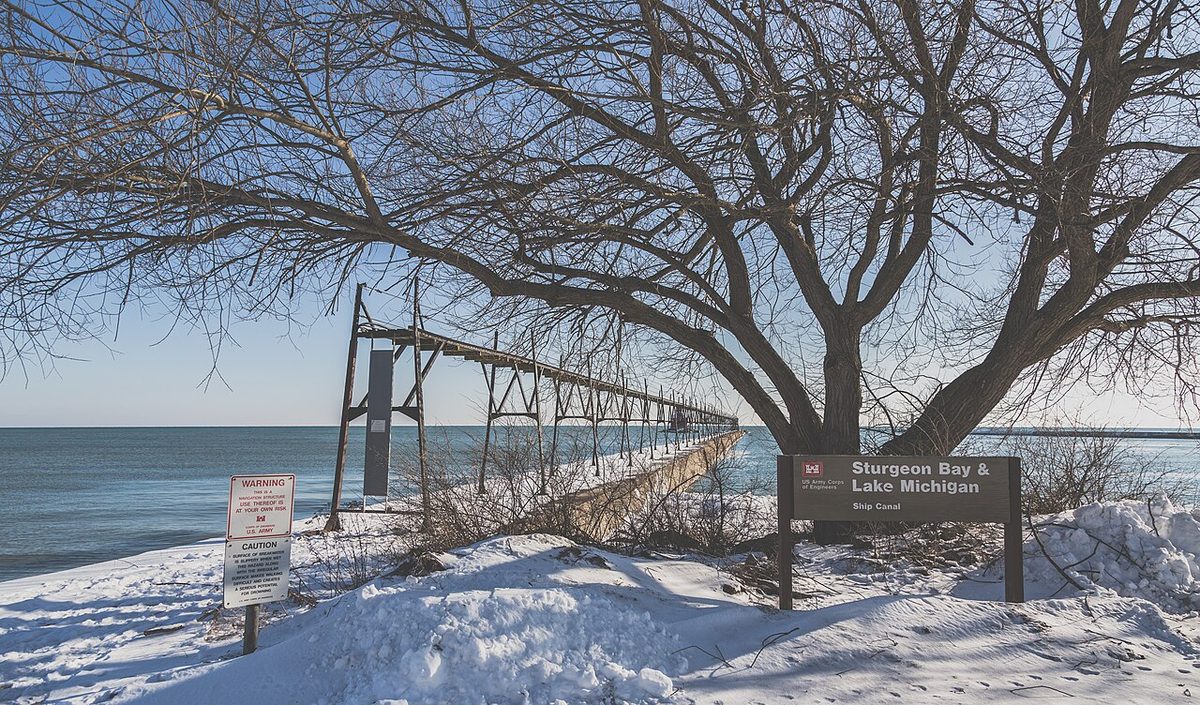
The coast turns over in late March. The locks reopen, the lakers at the yard fire up and leave one at a time, and the ship canal fills with broken, drifting ice. It is a good time to stand on shore and watch, and a bad time to walk out on any pier. The ice shanties come off the bay before the ice goes soft, or they are supposed to. The Badger returns in May, the charter boats go back in the water, and the summer people arrive wondering what everyone did all winter.
If you come up in winter, tell someone where you are going before you walk out on the ice. If you fly south instead, leave the truck plugged in.
Sources: NOAA Great Lakes Environmental Research Laboratory, annual maximum ice cover by lake, 1973 to 2026; U.S. Army Corps of Engineers Detroit District notices on the Soo Locks winter closure and 2026 opening; Washington Island Ferry Line (fleet and winter service); local reporting on the Fincantieri Bay Shipbuilding winter fleet and Door County ice fishing; Wisconsin DNR; Jacksonport Polar Bear Club and Fish Creek Winter Festival listings; DarkSky International on Newport State Park; Dominican Ministry of Environment announcements on the Samaná whale season; World Ocean School (read November 2026).