

Shipwrecks of the Schooner Coast
Two dozen shipwreck sites between Manitowoc and Sturgeon Bay are on the National Register of Historic Places. A table of every one, how they were lost, which you can see from shore, and what the 2021 national marine sanctuary changed.
Added in 2026. A new guide written for this archive from public sources (Wikipedia, the National Register of Historic Places, NOAA, the Wisconsin Historical Society and the attractions themselves). The original Schooner Coast site did not carry this page.
The original Schooner Coast page told seven shipwreck stories, all of them close to shore and marked by a sign. That was a sensible choice for a family travel site, and a small fraction of what is down there. The Wisconsin Historical Society estimates about 780 wrecks in Wisconsin's waters of Lake Michigan alone, roughly 250 of them located. A good share lie off this sixty-mile stretch, because this shore takes the brunt of the autumn northeasters, and because a schooner loaded to the rails had nowhere to hide between harbors.
What changed after 2015 is that the wrecks are now mapped, documented and, in large part, protected. Archaeologists from the Wisconsin Historical Society and volunteer divers have nominated one site after another to the National Register of Historic Places, and in 2021 NOAA created the Wisconsin Shipwreck Coast National Marine Sanctuary over the southern half of this coast.
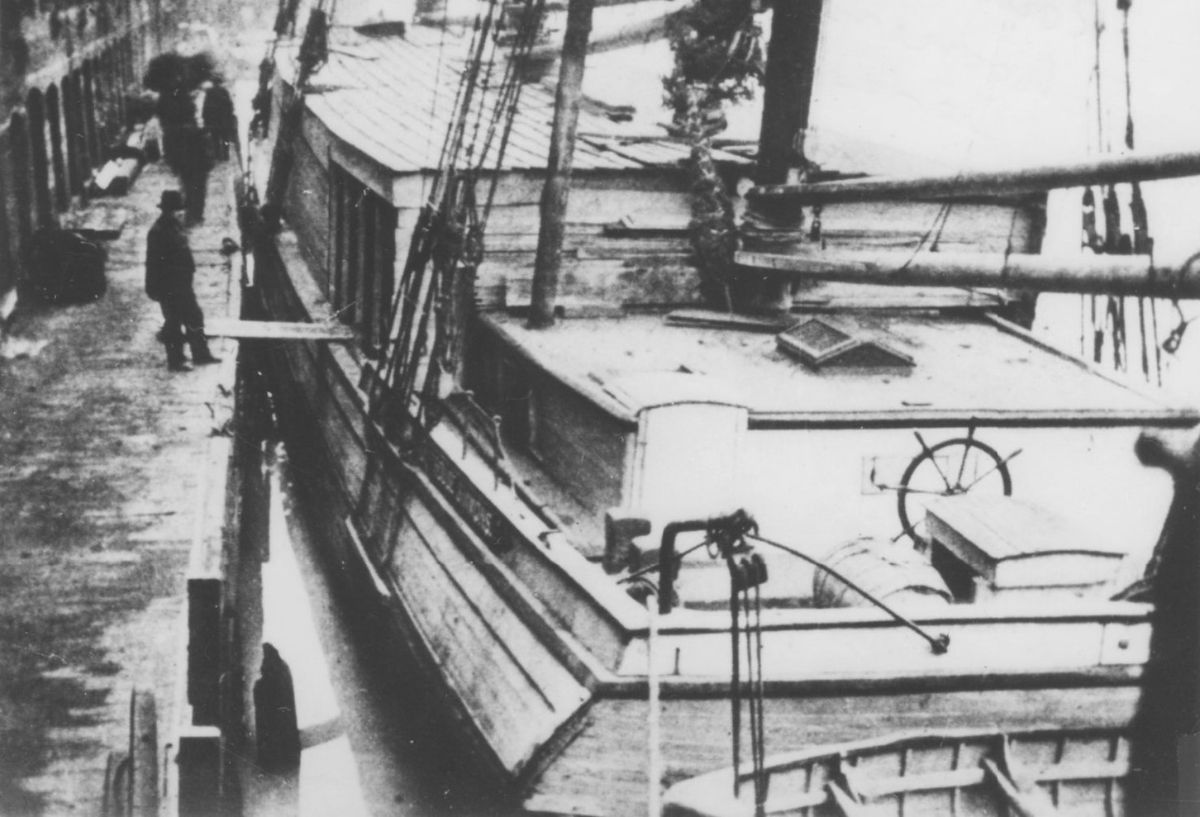
The listed wrecks, south to north
The table covers every shipwreck site on the National Register in Manitowoc and Kewaunee counties, plus those in and around Sturgeon Bay. Dates are the vessel's loss and its listing. Depths and distances come from the listing descriptions.
| Wreck | Type, built | Lost | Where | NRHP |
|---|---|---|---|---|
| Gallinipper | Schooner, 1832 | 1851 | Off Centerville, about 210 ft | 2010 |
| Home | Schooner, 1843 | 1858 | 10 mi SE of Manitowoc | 2010 |
| Floretta | Canal schooner, 1867 | 1885 | 11 mi SE of Manitowoc, 180 ft | 2014 |
| Arctic | Harbor tug, 1881 | Abandoned 1930 | 1.5 mi NE of Manitowoc breakwater | 2018 |
| Francis Hinton | Steam barge, 1889 | Nov. 1909 | Off Manitowoc | 1996 |
| Tubal Cain | Canal barque, 1866 | Nov. 26, 1867 | 1.3 mi NE of Two Rivers harbor | 2017 |
| Alaska | Scow schooner, 1869 | Mar. 23, 1879 | 4.2 mi NE of Two Rivers, 5 ft | 2017 |
| Major Anderson | Barkentine, 1861 | 1871 | Near the mouth of Molash Creek | 2014 |
| LaSalle | Canal schooner, 1874 | Oct. 25, 1875 | 1.3 mi S of Rawley Point | 2017 |
| S.C. Baldwin | Steam barge, 1871 | Aug. 1908 | 2.3 mi SSE of Rawley Point | 2016 |
| Lookout | Schooner, 1855 | Apr. 29, 1897 | Off Rawley Point | 2017 |
| Continental | Bulk carrier, 1882 | Dec. 1904 | 1 mi N of Rawley Point | 2009 |
| Pathfinder | Schooner, 1869 | Nov. 1886 | 2.6 mi N of Rawley Point, 12 to 15 ft | 2015 |
| Rouse Simmons | Schooner, 1868 | Nov. 1912 | 6 mi off Point Beach, 172 ft | 2007 |
| America | Canal schooner, 1873 | 1880 | 4 mi off Carlton | 2013 |
| Trinidad | Canal schooner, 1867 | May 1881 | 9.5 mi E of Algoma, about 270 ft | 2024 |
| Margaret A. Muir | Schooner, Manitowoc-built | Sept. 30, 1893 | Off Algoma harbor, about 50 ft | 2025 |
| John Evenson | Steam tug, 1884 | 1895 | Near Algoma (Ahnapee) | 2026 |
| Daniel Lyons | Schooner, 1873 | Oct. 18, 1878 | 4 mi off Stony Creek | 2007 |
| Lakeland (ex-Cambria) | Steel steamer, 1886 | Dec. 1924 | 6 mi E of Sturgeon Bay canal, 205 ft | 2015 |
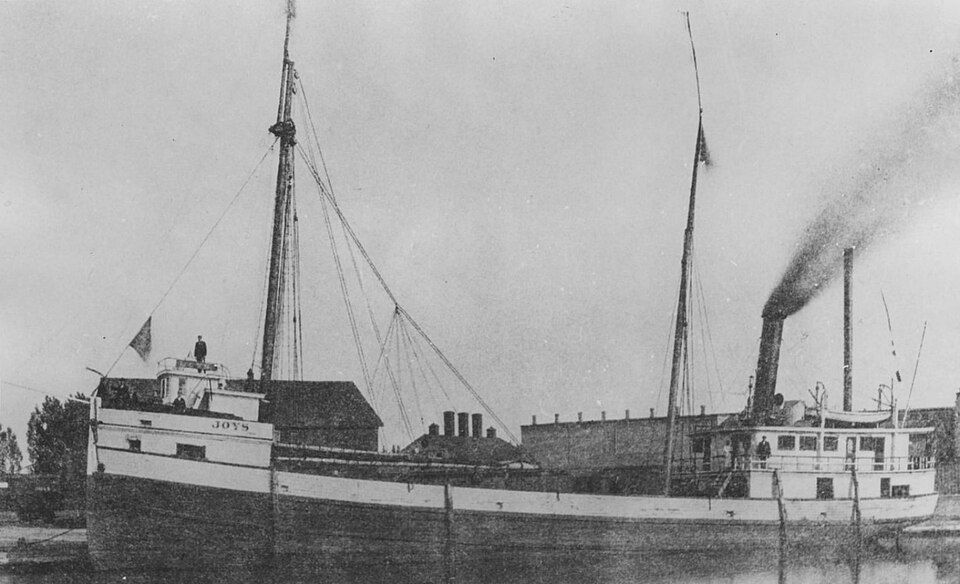
| Joys | Steam barge, 1884 | Dec. 1898 | 500 ft W of Sunset Park, Sturgeon Bay | 2007 |
| Empire State, Oak Leaf, Ida Corning | Steamer and two schooners | Burned 1931 | Bullhead Point, Sturgeon Bay | 2003 |
| Pride | Schooner | Not yet summarized | In the waters of Sturgeon Bay, within the city | 2024 |
| Green Bay (name assigned) | Sloop, about 1840 to 1860 | Unknown | 4 mi off Sturgeon Bay in Green Bay | 2009 |
| Advance | Schooner-barge, 1871 | 1921 | Sand Bay, off the Sand Bay peninsula | 2019 |
The steamer Vernon, lost off Two Rivers on October 29, 1887 with somewhere between 36 and 50 people, is missing from the table only because it has not been listed. It lies intact in about 210 feet of water.
Why so many, and why so intact
Read the "lost" column and a pattern jumps out: October, November, December, and the occasional April gale. These ships were running the last cargoes of the season, often overloaded, in the worst weather of the year. The Vernon's survivor said she had less than six inches of freeboard left. The Rouse Simmons went out with Christmas trees in every corner. The Pathfinder was driven ashore by a squall with a load of iron ore.
The other column worth reading is "type." Canal schooners, built to the exact size of the old Welland Canal locks so they could carry grain to Lake Ontario, show up again and again. So do steam barges carrying lumber, and old hulls finished off hauling limestone out of Sturgeon Bay before they were burned or abandoned.
Fresh, cold water is what keeps them. Lake Michigan has none of the shipworms that eat wooden hulls in salt water, and the deep water stays cold all year. NOAA describes several sanctuary wrecks as essentially intact, looking much as they did when they sank. An anchor dragged through a hull can undo that in an afternoon, which is why the sanctuary bans it.
The national marine sanctuary
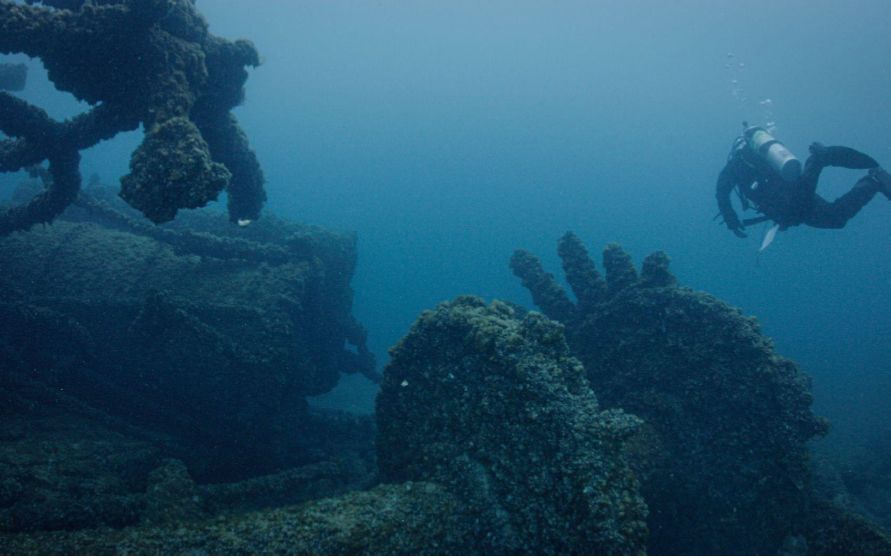
The Wisconsin Shipwreck Coast National Marine Sanctuary was designated on June 22, 2021, took effect that August and was celebrated at the Wisconsin Maritime Museum in Manitowoc on October 9, 2021. It covers about 726 square nautical miles off Ozaukee, Sheboygan, Manitowoc and Kewaunee counties, roughly 82 miles of shoreline, and is co-managed by NOAA and the State of Wisconsin. At designation it held 36 known wrecks dating from the 1830s to 1930, including the two oldest known in Wisconsin by date of construction, the Gallinipper of 1832 and the Home of 1843. Researchers think another 59 or 60 wrecks inside its boundary are still undiscovered.
For visitors the main rule is simple: look, photograph, leave everything. NOAA's regulations bar anchoring or grappling into wreck sites, a rule phased in while mooring buoys are installed. The Trinidad, found in 2023, lies just outside the boundary, which is one reason its discoverers pushed for a Register listing.
Wrecks you can see without diving
- Bullhead Point, Sturgeon Bay. The burned hulls of the Empire State, Oak Leaf and Ida Corning lie in shallow water off the point; the district has been on the National Register since 2003.
- Sunset Park, Sturgeon Bay. The Joys lies about 500 feet west of the park in shallow water.
- Ahnapee River, Algoma. The lower hull of the scow schooner Lady Ellen, laid up in a river slip in 1897 and left there, lies in the Ahnapee, as the original site described.
- Two Rivers. The Alaska lies in about five feet of water, and the Pathfinder in 12 to 15 feet near Rawley Point; on calm, clear days a boat or paddleboard may be enough.
- Indoors. Rogers Street Fishing Village in Two Rivers has the Rouse Simmons's wheel; the Wisconsin Maritime Museum in Manitowoc runs exhibits on Wisconsin shipwrecks.
Researching a wreck
The table above makes a good starting point for a school project, because every row has a public paper trail. Each listed wreck has a National Register nomination describing the vessel, her loss and what is left on the bottom, and most also have an entry in the Wisconsin Shipwrecks database with the ship's history and cargo. Many of those nominations came out of the Wisconsin Historical Society's maritime archaeology program, so the descriptions are based on dives, not guesswork.
The trap is choosing "Lake Michigan shipwrecks" as a topic and drowning in it. One ship works better: the Vernon and the open question of how many people were aboard, the canal schooner Floretta, lost in September 1885 carrying iron ore from Escanaba to Chicago, or simply why so many losses in the table fall in October and November. A guide to narrowing a research paper topic walks through the same move from a broad subject to a question you can answer. For the best-documented wreck on this coast, start with our Rouse Simmons guide.
For divers
The shallow wrecks off Two Rivers and in Sturgeon Bay are within reach of recreational divers in summer. The deep ones, the Rouse Simmons at 172 feet, the Vernon at about 210, the Lakeland at 205 and the Trinidad at about 270, are technical dives in cold, dark water. Wisconsin's state-run database, Wisconsin Shipwrecks, carries site histories and, for many wrecks, location details. Whatever the depth, the same ethic applies everywhere on this coast: nothing comes up except photographs.
Sources: Wikipedia's "List of Great Lakes shipwrecks on the National Register of Historic Places" and the NRHP lists for Manitowoc, Kewaunee and Door counties (which compile National Park Service listing data and Wisconsin Historical Society nominations); Wikipedia articles on the Wisconsin Shipwreck Coast National Marine Sanctuary, SS Vernon, Rouse Simmons, Margaret A. Muir (schooner) and Arctic (1881 tug); Wisconsin Shipwrecks database (all read November 2026).