
Subs, Tugs & Car Ferries
A World War II submarine, two tugboats you can walk aboard, a fish tug, the last coal-fired steamer on the Great Lakes and a car ferry that burned at its dock: the working boats of the Schooner Coast.
Added in 2026. The original Schooner Coast page at this address was never captured by the Wayback Machine. It was rebuilt in 2026 around the six boats the old site listed, with sources at the bottom.
Schooners gave this coast its name, but for the last hundred years it has made its living with engines. The old site's list of "modern maritime vessels" is a good cross-section: a submarine that stands in for the 28 built in Manitowoc, two retired tugs, a fish tug, a car ferry still in service and one that burned at its slip. Here is what each of them is and where to find it.
USS Cobia
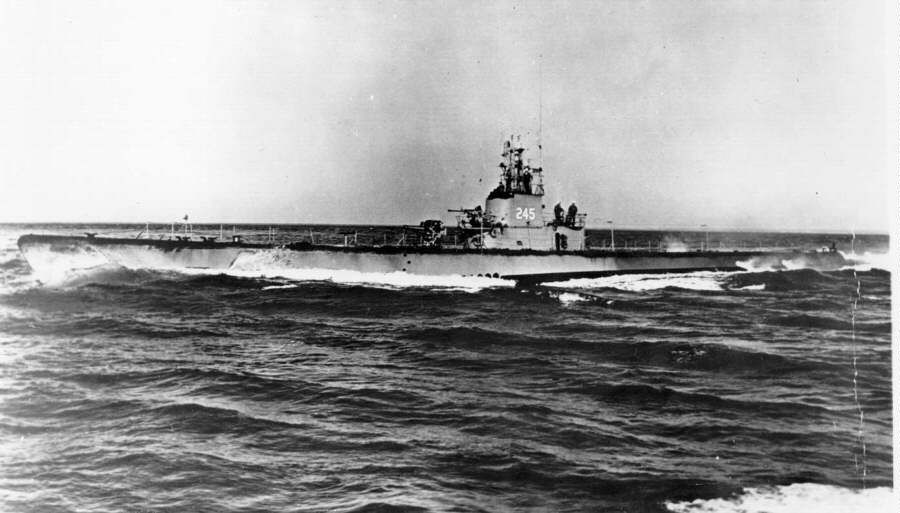
Cobia is a Gato-class submarine, 311 feet long, built by Electric Boat in Groton, Connecticut. She was laid down on March 17, 1943, launched that November and commissioned on March 29, 1944. She made six war patrols in the Pacific. On the first, in July 1944, she sank the transport Nisshu Maru, which was carrying the 26th Tank Regiment to Iwo Jima; casualties were light, but all 28 of the regiment's tanks went to the bottom. In February 1945 a gun duel with two small cargo craft killed one of her crew, Ralph Clark Huston Jr., the boat's only combat death. In April she rescued seven airmen from a downed Army bomber in the Java Sea. Four of her patrols were rated successful, earning four battle stars, and she was credited with 16,835 tons of shipping sunk.
After the war she trained reservists and submarine school students, and from 1959 she was a training hulk at the Naval Reserve Center in Milwaukee. Struck from the Navy list on July 1, 1970, she was towed to Manitowoc as an international memorial to submariners. In 1986 she became part of the Wisconsin Maritime Museum and was declared a National Historic Landmark. Much of her still works, including two main diesels, the radio room and the SJ-1 radar, believed to be the oldest operating radar set in the world. She went into dry dock for hull work in 2025.
Why a Connecticut boat stands in Manitowoc
In 1940 the Navy gave Manitowoc Shipbuilding a contract for ten submarines. The yard had never built one; the first was finished 228 days ahead of schedule, and by the end of the war Manitowoc had turned out 28. Getting them to salt water was its own project. The boats went down the Chicago Sanitary and Ship Canal and the Illinois River, rode a floating dry dock through the shallow stretches, and had their periscope shears and masts put back on at New Orleans. Cobia is of the same class as the Manitowoc boats, so she tells their story.
Visitors can tour her daily with the museum, and groups and individuals can book overnight stays aboard.
Fish Tug Buddy O
Commercial fishing on this coast was done from fish tugs, stubby enclosed boats built to set and lift nets out on the open lake. The Buddy O, on display at Rogers Street Fishing Village in Two Rivers, is one of them: about 40 by 12 feet, with a Kahlenberg oil engine. The museum says she was built at Sturgeon Bay Boat Works in 1935 for a fisherman in Frankfort, Michigan; some other listings give 1936. Visitors can climb aboard. For contrast, look across the harbor for the working boats of the LeClair family's Susie Q Fish Company, described on the original Two Rivers page.
Tug Ludington
The tug in Harbor Park in Kewaunee was built in 1943 for the Army and towed ammunition barges across the English Channel during the Normandy campaign. After the war she worked for the Army Corps of Engineers on Great Lakes harbor projects. She is listed on the National Register of Historic Places (2002) under her Army name, Major Wilbur F. Browder. The original site listed her as open from Memorial Day weekend through Labor Day; check with the city for the current season.
Tug John Purves
Moored at the Door County Maritime Museum in Sturgeon Bay, the John Purves was built in 1919, served the U.S. Army in World War II and then spent decades on the lakes. The original site credited her with towing everything from log rafts to 12,000-ton freighters. Restored, she is part of the museum visit; the original site promised a look at her crew cabins, winch room, engine room, galley and pilot house.
S.S. Badger Carferry
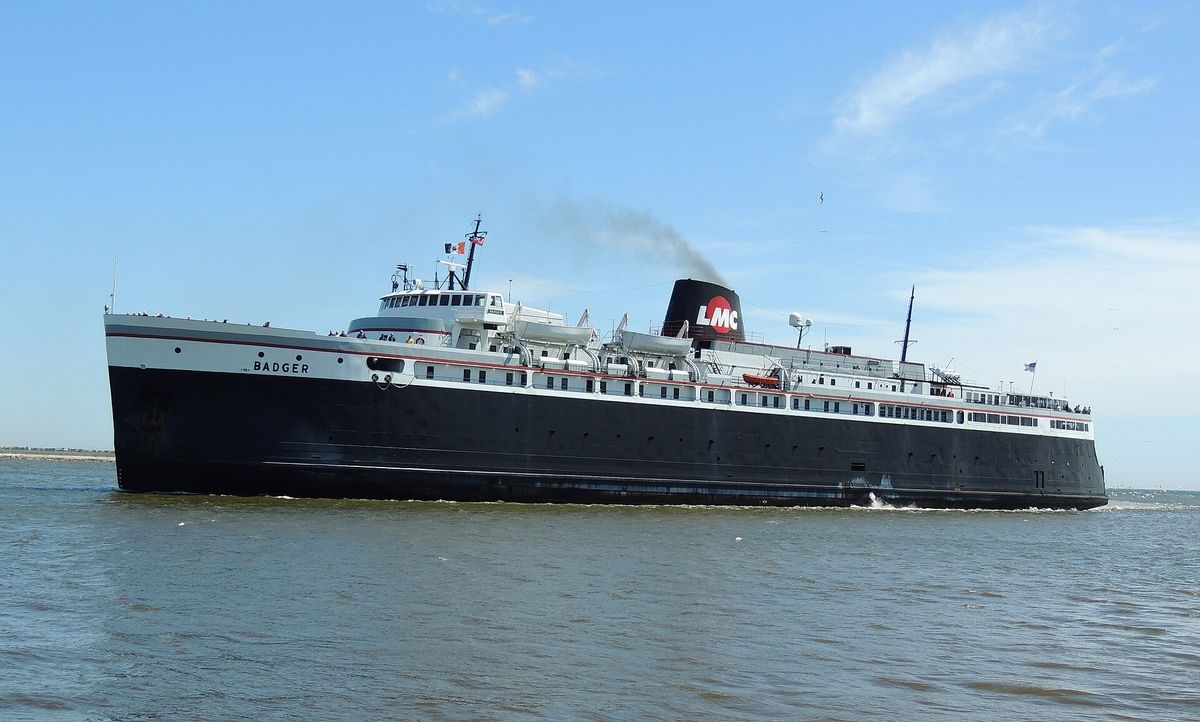
The Badger was built in 1952 by the Christy Corporation of Sturgeon Bay as a railroad car ferry for the Chesapeake and Ohio Railway, with a hull reinforced for ice. She entered service on March 21, 1953, and for decades carried freight cars, passengers and autos across the lake year-round. Rail ferry traffic withered after 1972, and in November 1990 her owner, facing bankruptcy, laid her up. Ludington native Charles Conrad bought her in 1991 and refitted her for passengers and cars only.
She runs today between Ludington, Michigan, and Manitowoc, 62 miles, in about four hours, from May to October. She keeps Michigan time and is officially part of U.S. Highway 10. She is the last coal-fired passenger vessel operating on the Great Lakes and the last vessel there with Skinner Unaflow engines. Since 2015 her ash has been kept aboard and sold for cement instead of being dumped in the lake. Listed on the National Register in 2009, she was made a National Historic Landmark on January 20, 2016. Interlake Steamship Company bought her in December 2020. A ramp failure at Ludington cut the 2023 season short, and service resumed in May 2024.
Ann Arbor No. 1
The old list ends with a boat nobody can visit. Ann Arbor No. 1, built in Toledo in 1892, was the first railroad car ferry on Lake Michigan, and her first crossing linked Kewaunee with Frankfort, Michigan. That first trip, on November 24, 1892, carried four cars of coal. Her end came at Manitowoc: on March 8, 1910, she caught fire in the Chicago and North Western car ferry slip and burned to the waterline. No one died. The hull was raised in June 1911 and taken to Muskegon to be rebuilt as a sand scow. The Badger is, in a sense, her great-granddaughter.
One more: the tug Arctic
Not on the old list but worth a mention: the remains of the harbor tug Arctic lie about a mile and a half northeast of the Manitowoc breakwater light. Rand & Burger of Manitowoc built her in 1881 as an ice-breaking harbor tug for the Goodrich Transportation Company; she spent summers at Manitowoc and winters at Milwaukee, was lengthened by twelve feet in 1898, and was stripped and abandoned in 1930 after 49 years of work. She was listed on the National Register in 2018.
How to see them in one trip
Start in Manitowoc with Cobia and, in season, watch the Badger come in. Drive to Two Rivers for the Buddy O and the old pierhead light, then to Kewaunee for the Ludington. Finish in Sturgeon Bay with the John Purves. That is about sixty miles, and the boats will take most of a day.
Sources: Wikipedia articles on USS Cobia, the Wisconsin Maritime Museum, Manitowoc Shipbuilding Company, SS Badger, the Door County Maritime Museum and Arctic (1881 tug); National Register listings in Kewaunee and Manitowoc counties; Rogers Street Fishing Village page on the Buddy O; Wisconsin Shipwrecks (Wisconsin Historical Society and Wisconsin Sea Grant) record for Ann Arbor #1 and the Manitowoc County Historical Society story on the ferry (read November 2026).