

About the Schooner Coast
Wisconsin's Schooner Coast
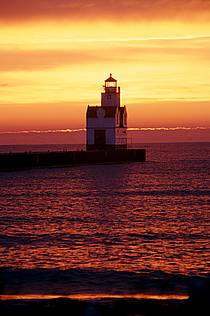
Leave the interstate behind and wind your way along a sixty-mile scenic stretch of Lake Michigan coastline.
To tour the Schooner Coast, simply begin in Manitowoc on Maritime Dr. Take Maritime Dr. to Hwy. 42, which leads to Two Rivers, Kewaunee and Algoma. Out of Algoma, take Hwy. S to Hwy. U to Sturgeon Bay.
Along the way, you'll experience the sights and sounds of Lake Michigan - quaint harbor towns, towering lighthouses, schooner shipwrecks and inviting sand beaches. Pause to fish on a pier or charter a sport fishing boat. Walk along a boardwalk and visit a fishing shanty. Enjoy miles of hiking and biking trails that meander along the great lake and inland rivers.
Meet friendly locals who are eager to share their favorite fishing spot, walking path or supper club. Visit two nationally recognized maritime museums waiting to enchant your family with intriguing maritime tales and experiences.
Your Schooner Coast voyage begins now...
What is a Schooner?
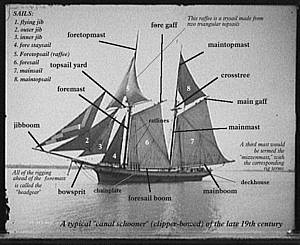
Before the Civil War, most of the sailing vessels of the Great Lakes were square rigged brigs or barques. That is, they had square sails on their masts. (Picture the HMS Surprise made famous in Patrick O'Brian's novels and the recent movie Master and Commander.)
Square rigged vessels dominated the trade routes of the world, so it was only logical that they would be the first to appear on the Great Lakes since the builders, owners and masters had migrated from the salt water coasts.
After the Civil War, schooners began to rapidly replace the square-rigged ships. This occurred because schooners were faster when sailing into the wind, known as "beating up wind." The schooner rigging was also simpler and therefore easier for the crew to handle and maintain.
The design of schooners evolved on the Great Lakes during the 1840s and 1850s. The builder who contributed most to this process was William W. Bates of Manitowoc. In 1852, he launched the first distinctive Great Lakes schooner, named the Challenge. While few features on the vessel were new, Bates combined a number of existing design elements into the vessel making it ideally suited for the Great Lakes trade. Challenge did not sit very deep in the water and was sharp ended (narrow in the bow and stern) and had a center board (a relatively thin board on the keel to counteract the tendency of a sailboat to move sideways) that could be raised and lowered in a watertight trunk. She also had a sleek clipper type bow with a long spar called a jibboom protruding from the front. This allowed Challenge to carry additional sails well out in front of her bow.
Challenge revolutionized sailing vessel design on the Great Lakes because of her dependability and speed, which was reported to be in excess of 13 knots (about 15 miles per hour). She could raise her center board reducing her draft (depth in the water), allowing her to safely navigate smaller ports, like Algoma, Kewaunee or Two Rivers. With the centerboard down, she was stable and fast in open water.
By the mid-1860s, the practical, durable schooners would become the standard on the Great Lakes. The comings and goings of schooners would shape both the development and history of the port towns of Wisconsin's Schooner Coast.
Questions visitors ask
Why was this stretch called the Schooner Coast?
Is the Schooner Coast still promoted as a tourism route?
Original text restored from the Wayback Machine capture of October 17, 2015. Typos and dead links were tidied; nothing else in the original section was rewritten. How this archive works.